Chapter 12 Secondary Units
What Is A Secondary Unit?
In an ERP system, "quantity" and "unit of measure" look like very basic concepts. Sell 10 pieces, purchase 5 boxes, receive 3 rolls, deliver 20 sheets: one quantity plus one unit seems enough.
But in many real industries, one quantity dimension is not enough.
Examples:
- Ladders are sold by piece, but the business also needs to record how many meters each piece is.
- Fabric is purchased by roll, while purchasing and warehouse teams also care how many meters each roll contains.
- Boards move by sheet, but quotation or analysis may need square meters.
- Cartons ship by box, while customers and warehouse teams also care how many units are inside each box.
- Processed parts are managed by piece, while quotation or production also cares about unfolded area, processing length, or weight.
In these scenarios, piece, roll, box, and sheet are the main units used by Odoo's standard sales, purchase, inventory, and invoicing processes. Meter, square meter, inner quantity, unfolded quantity, and processing quantity are auxiliary business dimensions that are also important.
We usually call this auxiliary dimension a secondary unit. It can also be understood as an auxiliary unit or business specification unit.
Secondary Unit Does Not Replace The Main Unit
The secondary unit is not meant to replace Odoo's native unit of measure system.
Odoo standard units mainly support the core quantity basis:
- Sales order quantity.
- Purchase order quantity.
- Stock move quantity.
- Invoice quantity.
- Quantity used for cost and inventory valuation.
These quantities should usually remain stable, consistent, and accountable.
Secondary unit solves another problem: when the business needs to record another auxiliary dimension at the same time, how should the system express it?
Example on a sales order:
Sales quantity: 4 pieces
Secondary quantity per piece: 2.5 meters
Total secondary quantity: 10 meters
The Odoo main quantity is still 4 pieces. Sales, inventory, and invoicing can continue to run by piece. The 10 meters expresses the length that the customer cares about, the internal handover specification, or the auxiliary dimension needed for reporting.
Why Not Use Native Unit Conversion For Everything?
Odoo native unit conversion is very useful for standard conversions within the same unit category:
- 1 box = 24 units.
- 1 meter = 100 centimeters.
- 1 ton = 1,000 kilograms.
But secondary units often are not such simple conversions.
They may not belong to the same unit category as the main quantity, and each product may have its own business rule. For example, "one piece" can mean completely different lengths, areas, or unfolded quantities for different products. "One roll" may have a different length that must be entered during purchase or receipt.
If this is forced into native unit conversion, several problems may appear:
- Main stock quantity basis becomes unstable.
- Sales, purchase, and invoicing quantities become unclear.
- Business specifications differ by product and are hard to express consistently.
- Quotation, warehouse, and customer communication still require many notes.
A safer approach is to keep the main unit for Odoo's standard processes and use secondary units as an independent auxiliary business dimension.
What Problems Secondary Units Solve
Secondary units are suitable when the main quantity supports business flow but cannot fully express business specifications.
Typical value includes:
- Sales orders can show purchase quantity and specification quantity at the same time.
- Purchase orders can record supplier delivery specifications.
- Inventory transfers can keep planned quantity and actual auxiliary quantity.
- Reports can analyze length, area, inner quantity, and other business dimensions.
- Notes, spreadsheets, and manual communication are reduced.
The core value is not "one more field." It turns business information from unstructured notes into structured data that can be validated, calculated, transferred, and reported.
Implementation Pattern
Qingdao Ohm's secondary unit solution is a business enhancement built on top of Odoo's native unit system.
It does not replace native UoM, and it does not change Odoo's standard sales, purchase, inventory, and invoicing quantity chain. Instead, it adds a configurable, validated, calculated, and transferable auxiliary quantity dimension outside the main quantity.
It can be summarized as:
Main quantity: standard system quantity
Example: 10 pieces, 5 rolls, 3 boxes

Secondary quantity: auxiliary business quantity per main unit
Example: 2.5 meters per piece, 80 meters per roll, 24 units per box

Total secondary quantity: main quantity x standardized secondary quantity
Example: 10 pieces x 2.5 meters per piece = 25 meters
This pattern fits companies whose main quantity can support Odoo's standard process, but whose daily business still needs to record specification, length, area, inner quantity, or processing quantity.
Core Features
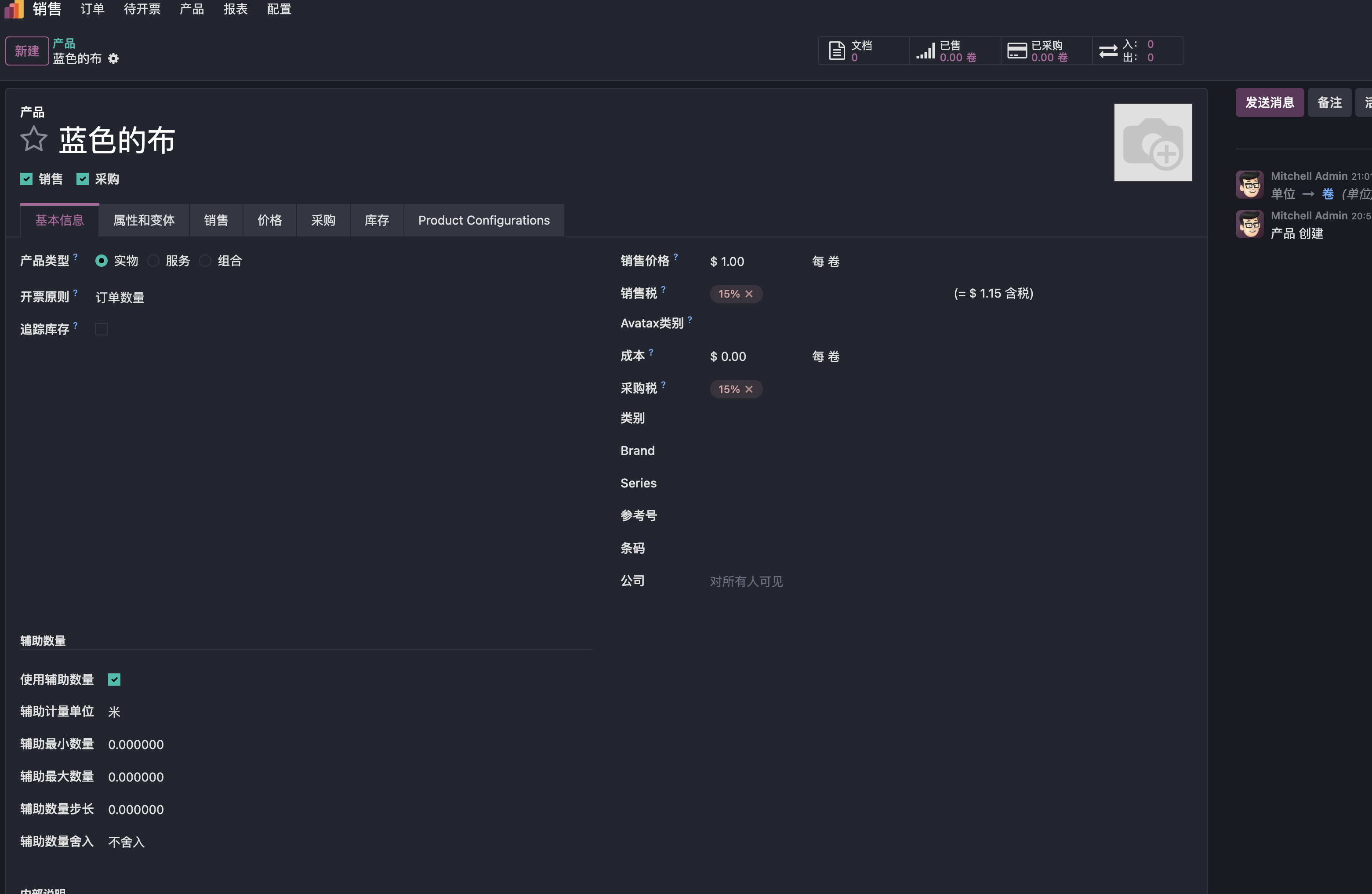
1. Product-Level Secondary Unit Configuration
The solution supports enabling secondary quantity on products and configuring rules:
- Whether secondary quantity is enabled.
- Secondary unit, such as meter, square meter, unit, package, and so on.
- Minimum secondary quantity allowed per main unit.
- Maximum secondary quantity allowed per main unit.
- Secondary quantity step.
- Secondary quantity rounding method.
Product-level configuration turns business experience into system rules. For example, if a product length must increase by 0.5 meters, the system can standardize the input according to configuration and avoid inconsistent manual values.
2. Secondary Quantity On Sales Orders
Users can enter secondary quantity on sales order lines.
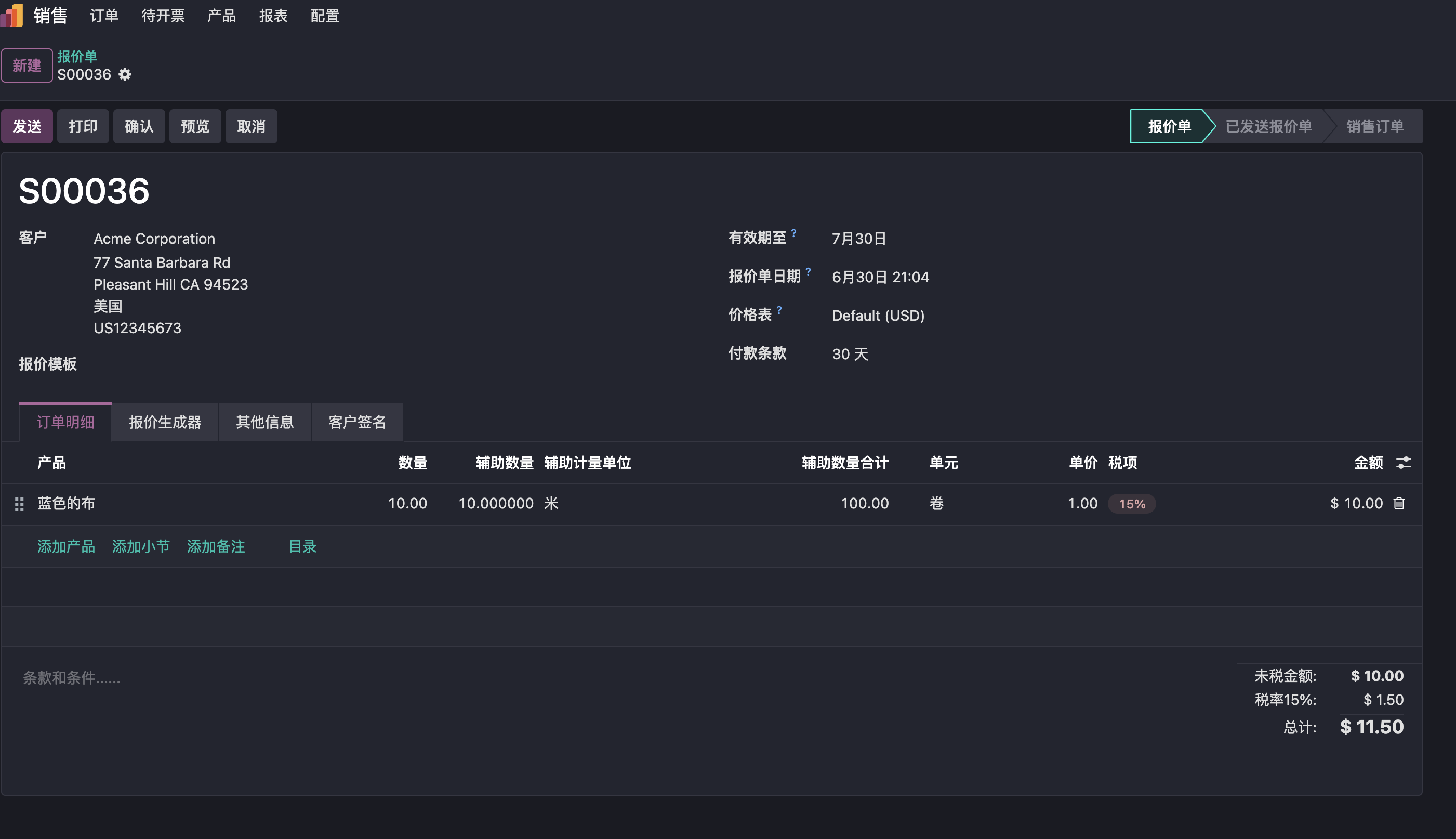
Example:
Sales quantity = 10 rolls
Secondary quantity per roll = 10 meters
Total secondary quantity = 100 meters
The sales quantity is still the Odoo standard quantity of 10 rolls. The secondary quantity helps express specification, quotation basis, customer confirmation, or report analysis. This keeps the standard sales process while making the sales document more accurate.
3. Secondary Quantity On Purchase Orders
Purchase order lines can also use secondary quantity.
Purchase quantity = 6 rolls
Secondary quantity per roll = 80 meters
Total secondary quantity = 480 meters
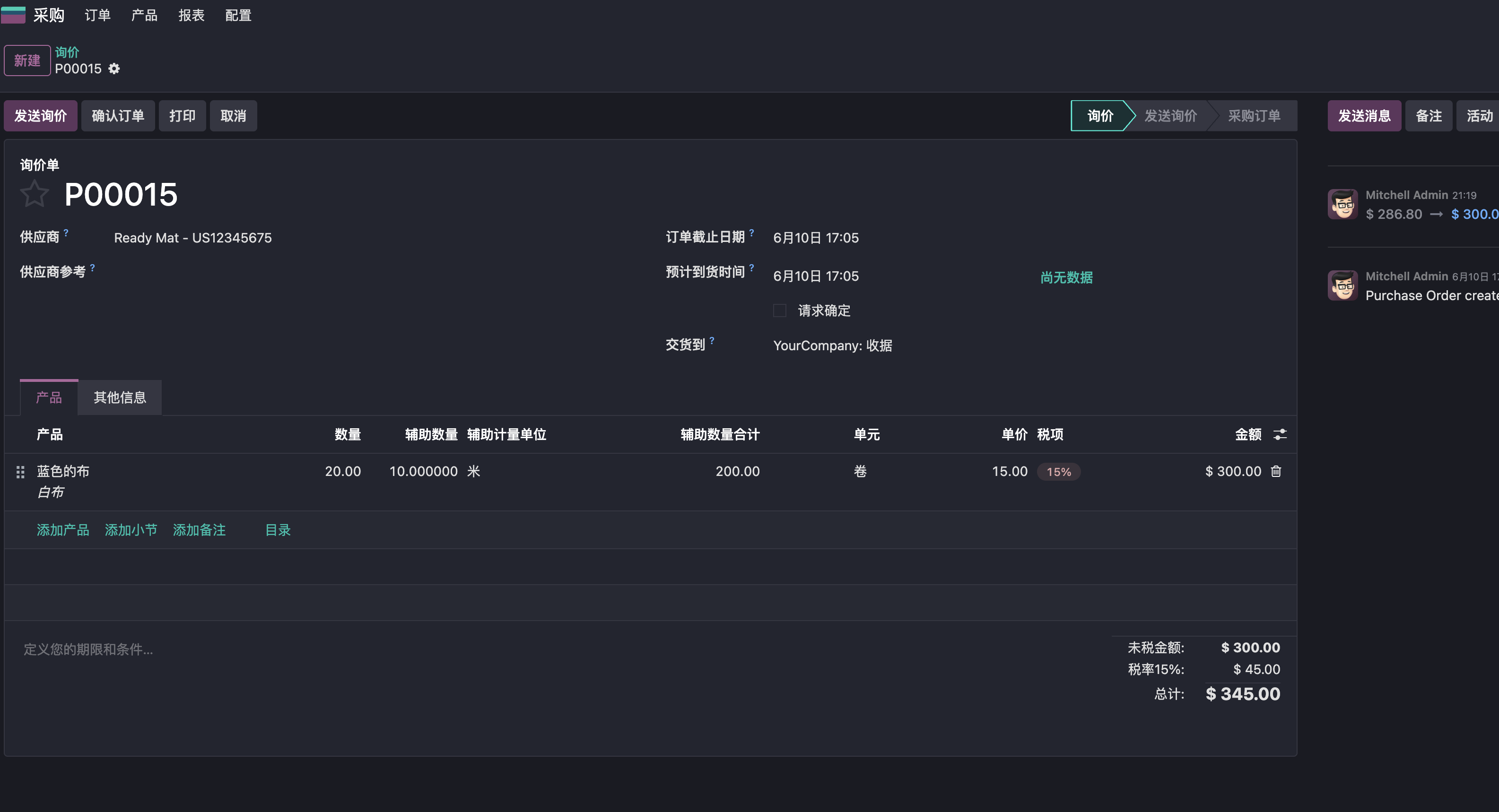
Purchasers can enter the main quantity according to the supplier's delivery method and record auxiliary quantity at the same time. This is very useful for fabric, rolls, boards, packaging materials, and similar industries.
If needed, purchase secondary quantity can continue into the receipt process and reduce information gaps between purchasing and warehouse teams.
4. Secondary Quantity On Inventory Transfers
Inventory supports secondary quantity at both planned transfer and actual operation levels.
Example:
Planned delivery = 10 boxes
Secondary quantity per box = 24 units
Planned total secondary quantity = 240 units

Actual completed = 8 boxes
Secondary quantity per box = 24 units
Actual total secondary quantity = 192 units
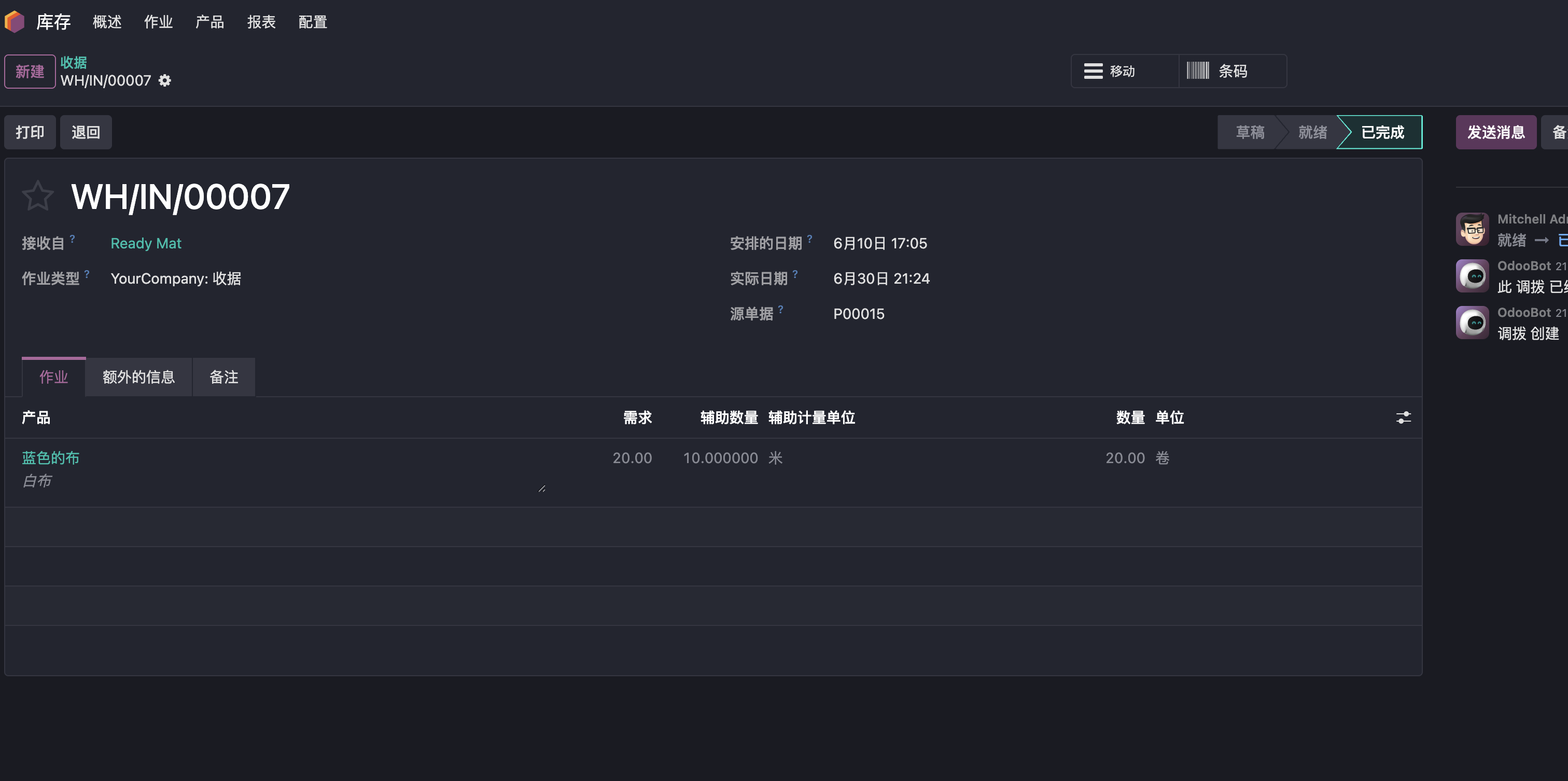
The warehouse can complete operations by main quantity while keeping auxiliary specification information. For companies that need to check length, area, inner quantity, or packaging specification, this reduces offline records and manual communication.
5. Secondary Quantity In On-Hand Stock And Reports
Inventory can show secondary quantity in on-hand stock and reports.
On-hand stock = 100 rolls
Secondary quantity per roll = 80 meters
Total secondary quantity on hand = 8,000 meters
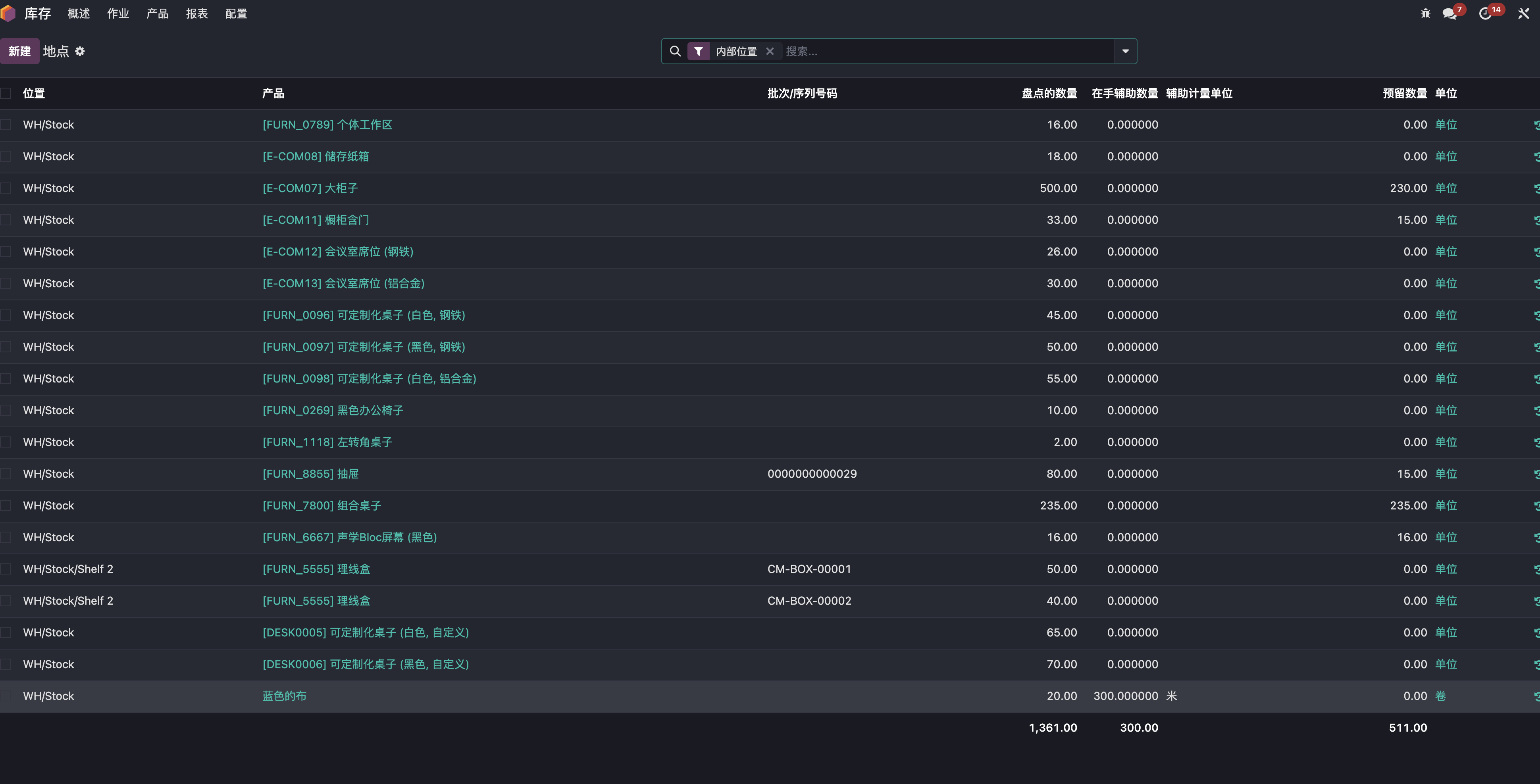
Users can review secondary quantity in inventory, sales, and purchase reports, supporting analysis by business specification.
6. Inventory Adjustment Support
During inventory adjustments, the system can also record and validate secondary quantity.
Counted quantity = 50 rolls
Secondary quantity per roll = 80 meters
Counted total secondary quantity = 4,000 meters
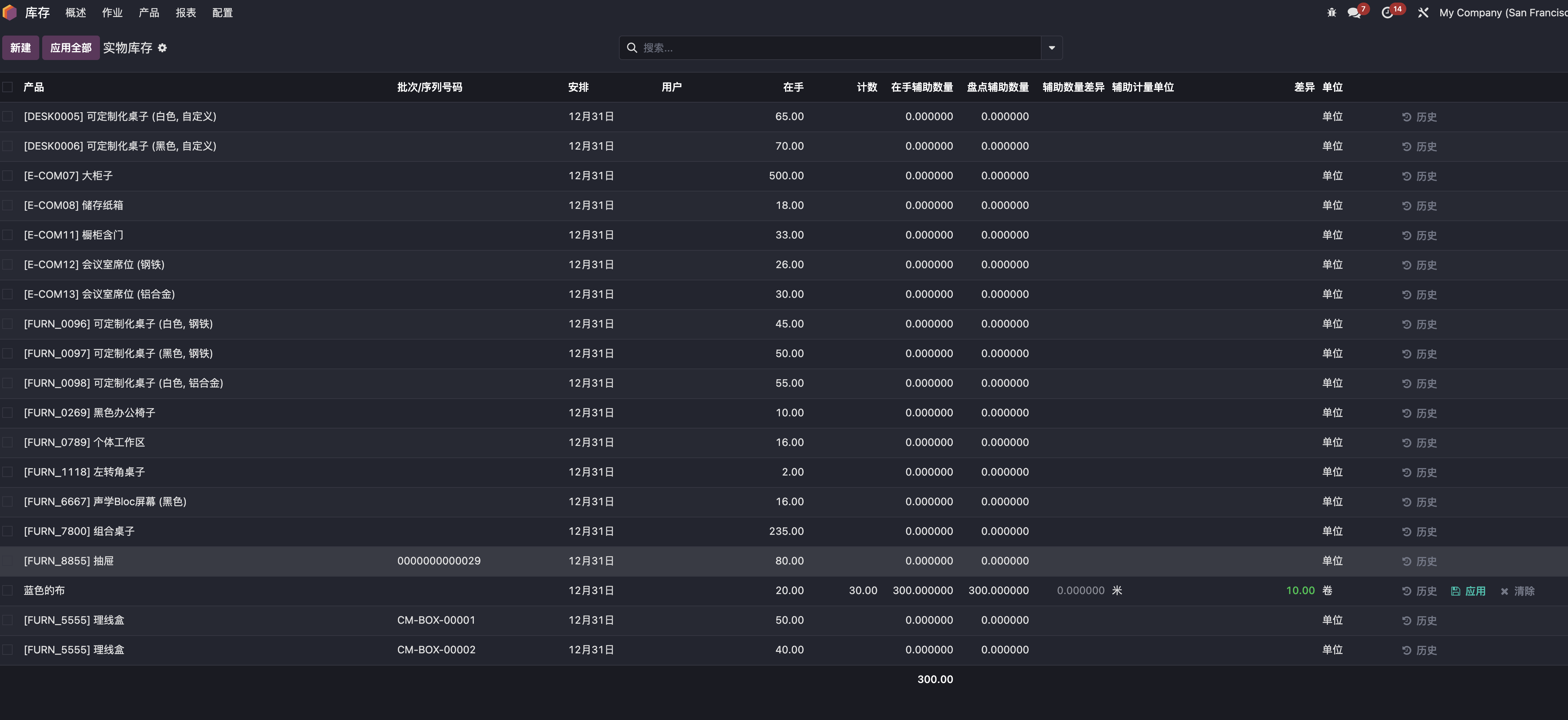
The counting team can check both main quantity and auxiliary specification, improving inventory data completeness and accuracy.
Business Value
The secondary unit solution solves a data-structure problem, not just a field problem. It provides value by:
- Making product specifications more structured than plain notes.
- Letting sales, purchase, and inventory documents carry richer business information.
- Reducing manual conversions and repeated communication.
- Supporting min/max, step, rounding, and validation rules.
- Creating a unified base for pricing, reporting, and industry extensions.
- Improving business fit without disturbing Odoo's standard process.
For many companies, the hard part is not whether a system exists, but whether the system can express the details of real operations. Secondary units make Odoo closer to those details.
Summary
Qingdao Ohm Network Technology's secondary unit solution is a reusable Odoo enhancement refined from multiple industries. It lets companies keep Odoo's standard main quantity system while flexibly recording length, area, inner quantity, packaging specification, processing quantity, and other auxiliary business quantities. The standard process remains stable, while business documents become more complete.
If a company later needs pricing by secondary quantity, invoicing by secondary quantity, manufacturing integration, report expansion, or external system integration, it can continue evolving from the general solution.
At this point, Part 3 Sales Management has covered sales overview, products, quotations, orders, invoicing, pricing, taxes, inventory delivery, returns, rental, excise duty, and secondary units. The next part moves into Purchase Management and explains how companies handle procurement from sales demand, stock replenishment, and vendor collaboration.